After an Angry Day: How to Repair With Yourself
Anger often protects something tender. Learn a body-to-name repair sequence, clean apologies, and how to track the full emotional arc—not only the spike.
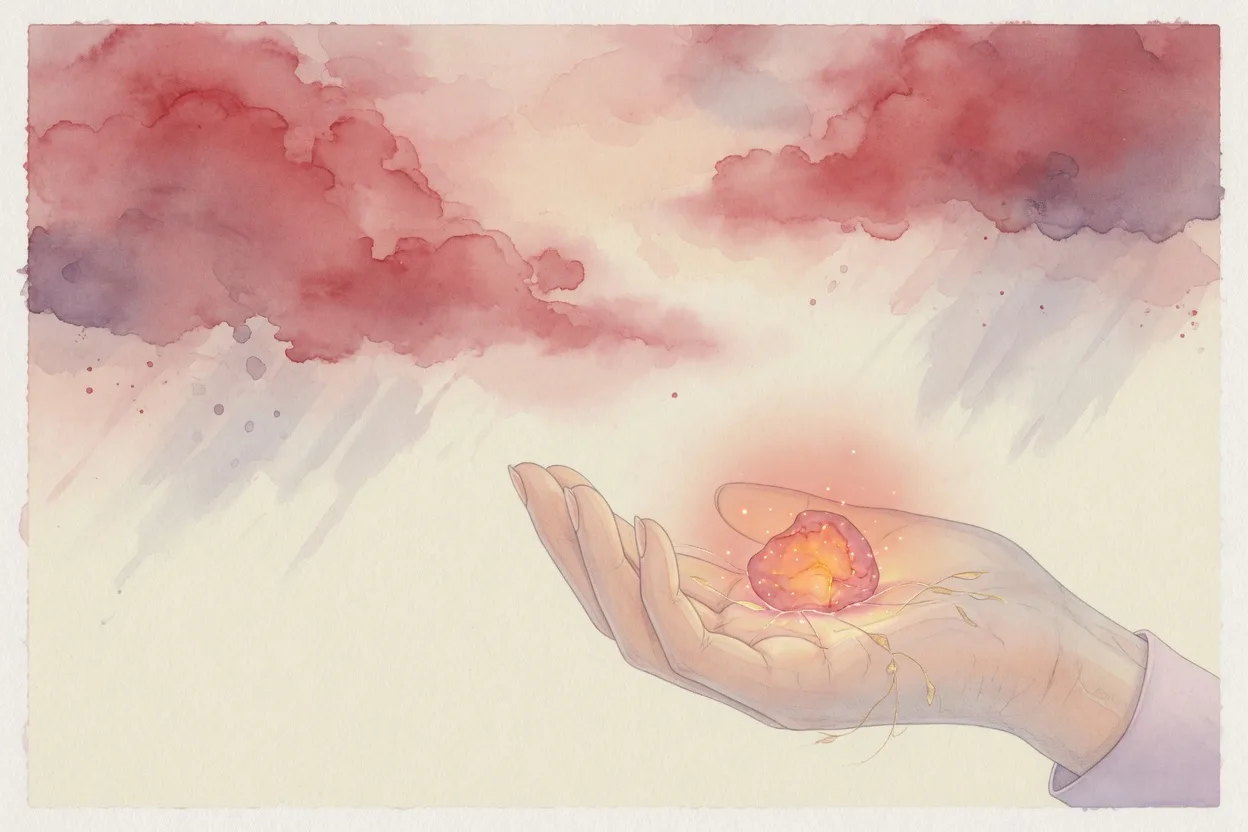
Anger gets a bad reputation. In reality, anger often shows up as a bodyguard for humiliation, fear, injustice, or exhaustion. The problem is rarely that you felt angry. The problem is what happens after—rumination, shame, or harm you regret.
This guide is about after an angry day: how to repair with yourself without self-attack, how to separate heat from harm, and how to log the full arc so you learn your recovery style. Pair it with naming feelings and self-compassion when gratitude feels fake.
Separate heat from harm
Ask two different questions:
- What was the anger protecting? (respect, safety, fairness, rest, dignity)
- Did my actions align with the person I want to be?
You can validate the first while still taking responsibility for the second. That split is adult emotional literacy—not “anger is bad,” and not “anger means I get a free pass.”
A repair sequence with yourself
Use this sequence when the spike has passed enough that you can think in sentences.
Discharge the residue (body)
Walk, shake out hands, cold water on wrists, longer exhales. Anger is physiological; ideas alone may not clear it. A short body scan or breathing practice can help.
Name the tender layer
Under the spike, what lived there? Disrespected? Cornered? Unseen? Scared of losing control? Use specific language from naming feelings.
Write an unsent note
Say everything raw on paper or in a private log. Do not send yet. This is for your nervous system, not the courtroom of the relationship.
Choose one repair action
If you harmed someone: a clean apology without self-annihilation. If you only harmed yourself: a boundary, rest, or a plan for next time (soft boundaries).
What a clean apology is (and isn’t)
Is
- Impact + responsibility + change
- “I raised my voice and that was scary. I’m sorry. Next time I’ll pause and step outside.”
Isn’t
- “I’m sorry you feel that way”
- Erasing your needs entirely
- Begging for worth
- A new monologue that re-argues the original fight
Self-respect and accountability can share a room.
Log the arc, not only the spike
In a mood tracker, the spike alone misleads. Track the arc:
- Afternoon: angry 8
- Evening: ashamed 6
- Next morning: tired 4, clearer 5
The arc teaches your recovery style—and recovery is a skill. In MoodEvo, two or three entries across the evening beat one furious note you never revisit.
Also notice:
- Sleep, hunger, and overload as amplifiers
- People or contexts that repeatedly arm the bodyguard
- Whether repair actions actually lower next-day intensity
When anger is information about systems
Sometimes anger is not only personal—it points to unfair loads, violated boundaries, or unsafe environments. Self-repair does not mean gaslighting yourself into “I overreacted” when you were right to be angry. It means choosing responses that protect you without burning the only bridge you need—or without staying where harm is structural.
If anger includes violence, coercion, or you fear for safety, prioritize safety planning and professional/emergency help.
Common after-anger traps
| Trap | Cost | Exit |
|---|---|---|
| Rumination loops | Sleep loss, next-day spike | Time-box the unsent note; then body discharge |
| Total self-erasure | Resentment later | Clean apology + keep your need |
| Premature peacemaking | Fake repair | Wait until nervous system is under threshold |
| Eternal justification | No learning | One tender name + one next-time plan |
My anger tried to keep me from being small. Next time I can protect myself with more precision and less scorched earth.
Sources and scope
- The American Psychological Association’s anger guide describes anger as a normal emotion and focuses on reducing destructive reactions and physiological arousal.
- The World Health Organization’s stress-management guide provides grounding and noticing skills that can complement reflection.
These are general educational resources, not individualized treatment. Seek professional help when anger feels uncontrollable, frightening, violent, or is damaging important parts of life.
Closing
You are allowed to learn mid-life, mid-week, mid-mess. That is not failure. That is human repair.
Feel the heat. Name the tender. Discharge the body. Choose one repair. Track the arc.
That sequence will not make you never angry. It will make you less alone with what anger was trying to protect.
Spike is not the whole story
Intensity now + one tender name + one repair action. Clarity over shame.
When you're ready
Name one feeling. That's enough for today.
MoodEvo is a gentle place to notice how you feel in under a minute — no fixing, no streak guilt.