When Gratitude Feels Fake: What to Try Instead
Forced gratitude can deepen shame. Self-compassion alternatives: neutral noticing, micro-relief, and thankfulness that still builds resilience.
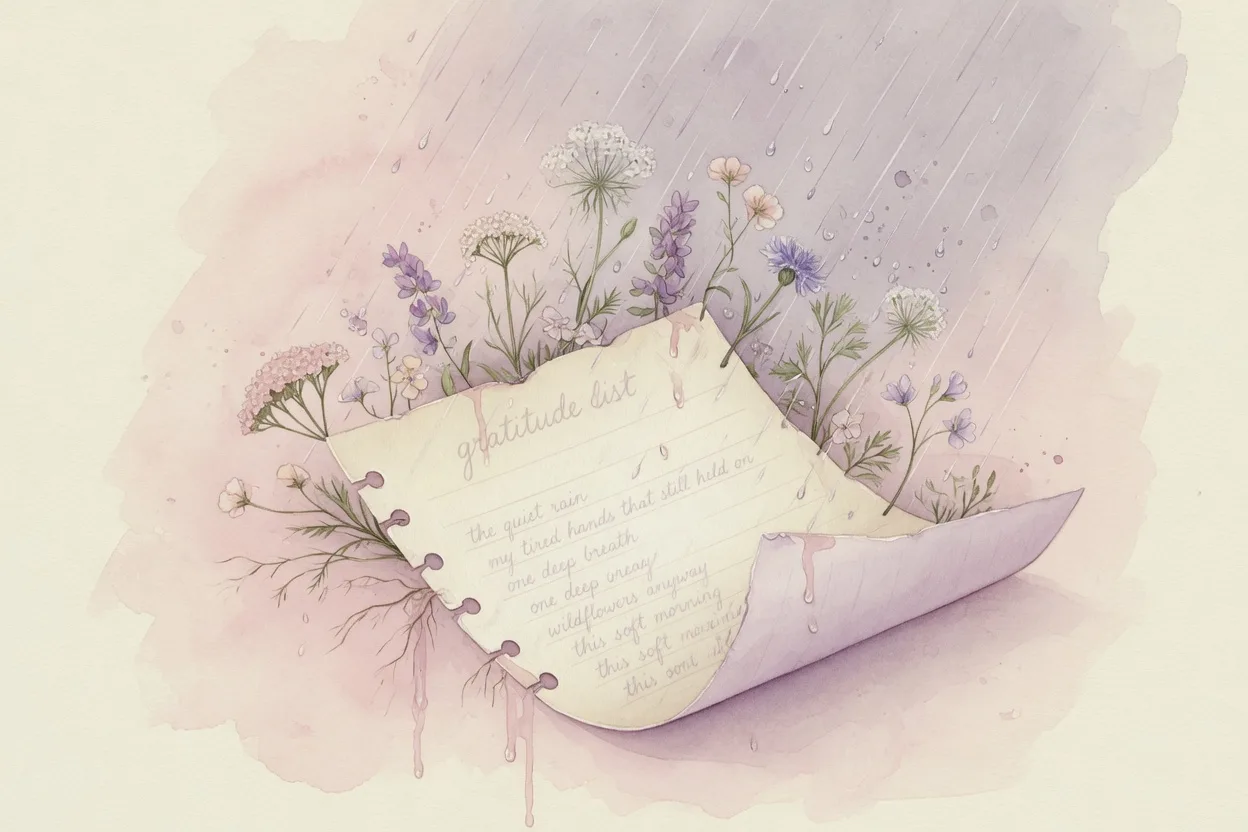
Gratitude lists are everywhere. For some people they open a window. For others they feel like emotional gaslighting: Be grateful—your sadness is ungrateful.
If that second voice is familiar, you are not broken at “positive thinking.” You may simply need a practice that respects pain before it reframes it. This article explains when gratitude feels fake, why forced thankfulness backfires, and what to try instead—without abandoning resilience.
It pairs naturally with naming feelings without fixing them and with repairing after hard emotions like anger.
Why forced gratitude backfires
When the nervous system is in threat, grief, or depletion, skipping straight to “the bright side” can:
- Invalidate the feeling that is still active
- Add a second layer of shame (“I can’t even do gratitude right”)
- Train you to distrust your own signals
- Turn a tool into a moral test of character
Real resilience includes room for sorrow, anger, fatigue, and “I don’t feel grateful today.” Self-compassion research traditions (including Kristin Neff’s widely cited framework) emphasize kindness toward struggle—not self-pity, but regulation skill.
Signs gratitude practice is harming you
- You write the list and feel emptier or angrier
- You use gratitude to shut someone up—including yourself
- Entries sound like PR copy, not lived truth
- You skip hard emotions so you can stay “grateful enough”
- Missed days create more shame than the practice creates relief
If several apply, pause classic lists. Swap tools for a season.
Three alternatives that still build strength
1. Neutral noticing (the muscle under gratitude)
Instead of “I’m grateful for my job,” try:
“Today I noticed sunlight on the wall for ten seconds.”
Noticing is the foundation. Thankfulness can grow later—if and when it is true. This is especially useful on nights when a 2-minute body scan also helps you return to sensory fact.
2. Micro-relief (5% less suffering)
Ask: What reduced suffering by about 5% today?
A warm shower. A meme. A canceled meeting. A quiet corner. That counts. Micro-relief is honesty for depleted people—see also soft boundaries when depleted.
3. Self-compassion statement
This is a hard moment. Hard moments happen to humans. May I be gentle with myself while it passes.
You can log this as a note beside mood intensity. The point is not poetry. The point is stopping self-attack mid-spiral.
Name the hard thing first
One sentence. No polishing. (“Lonely after the message.”)
Choose one alternative tool
Neutral notice, micro-relief, or self-compassion—not all three unless capacity is high.
Optional gratitude only if true
One item that feels true in the body. Skip if nothing is true tonight.
Permissioned gratitude (if you still want the list)
Use gratitude only with rules:
- After naming the hard thing
- Only items that feel true in the body
- Never as proof you “shouldn’t” feel bad
- Allow and language: “I’m still lonely, and the tea was good.”
Both can be true. The and is the medicine—not the demand to feel blessed.
Optional is the medicine. Optional restores choice—and choice is where dignity lives.
A journal template that respects mixed days
Try three lines (works in any notebook or MoodEvo Record):
- What hurt or drained me
- What I needed
- One true small good (optional)
Optional is intentional. When line 3 is empty, the entry is still complete.
Example:
1) Left out in the group chat 2) Needed quiet + one honest friend 3) Walk after dinner helped 10%
Gratitude, mood tracking, and SEO-honest claims
Mood tracking does not force positivity. It forces visibility. Over weeks you may see: forced gratitude days correlate with higher shame notes; micro-relief days correlate with slightly better sleep or lower intensity. That pattern is more useful than a perfect list.
Avoid treating any wellness technique as a cure. If depression, trauma, or crisis is present, self-help templates are adjuncts—not replacements for care.
Sources and scope
- Emmons and McCullough (2003), “Counting Blessings Versus Burdens”, compared gratitude-listing with other journaling conditions.
- The study found benefits on some outcomes, not all outcomes or all people. It does not establish gratitude journaling as a treatment for depression or trauma.
That mixed, bounded evidence is why this article offers gratitude as optional noticing—not a duty, cure, or test of character.
Closing
You do not have to be grateful on schedule to be growing. Sometimes the bravest entry is: nothing feels good, and I am still here without attacking myself.
That is not cynicism. That is accurate kindness.
Skip the performance list
Hard thing → need → optional small good. Curiosity over correctness.
When you're ready
Name one feeling. That's enough for today.
MoodEvo is a gentle place to notice how you feel in under a minute — no fixing, no streak guilt.
Continue reading

Build a Mood Tracking Habit That Isn’t a Chore
How to design a daily mood journal ritual without streaks guilt—minimal check-ins, energy templates, and soft restarts after missed days.
After an Angry Day: How to Repair With Yourself
Anger often protects something tender. Learn a body-to-name repair sequence, clean apologies, and how to track the full emotional arc—not only the spike.